
Proteomics for Drug Safety Assessment
Detect toxicity before candidates advance. This application note shows how high-throughput proteomic profiling can reveal toxicity signals while helping resolve the mechanisms behind them.
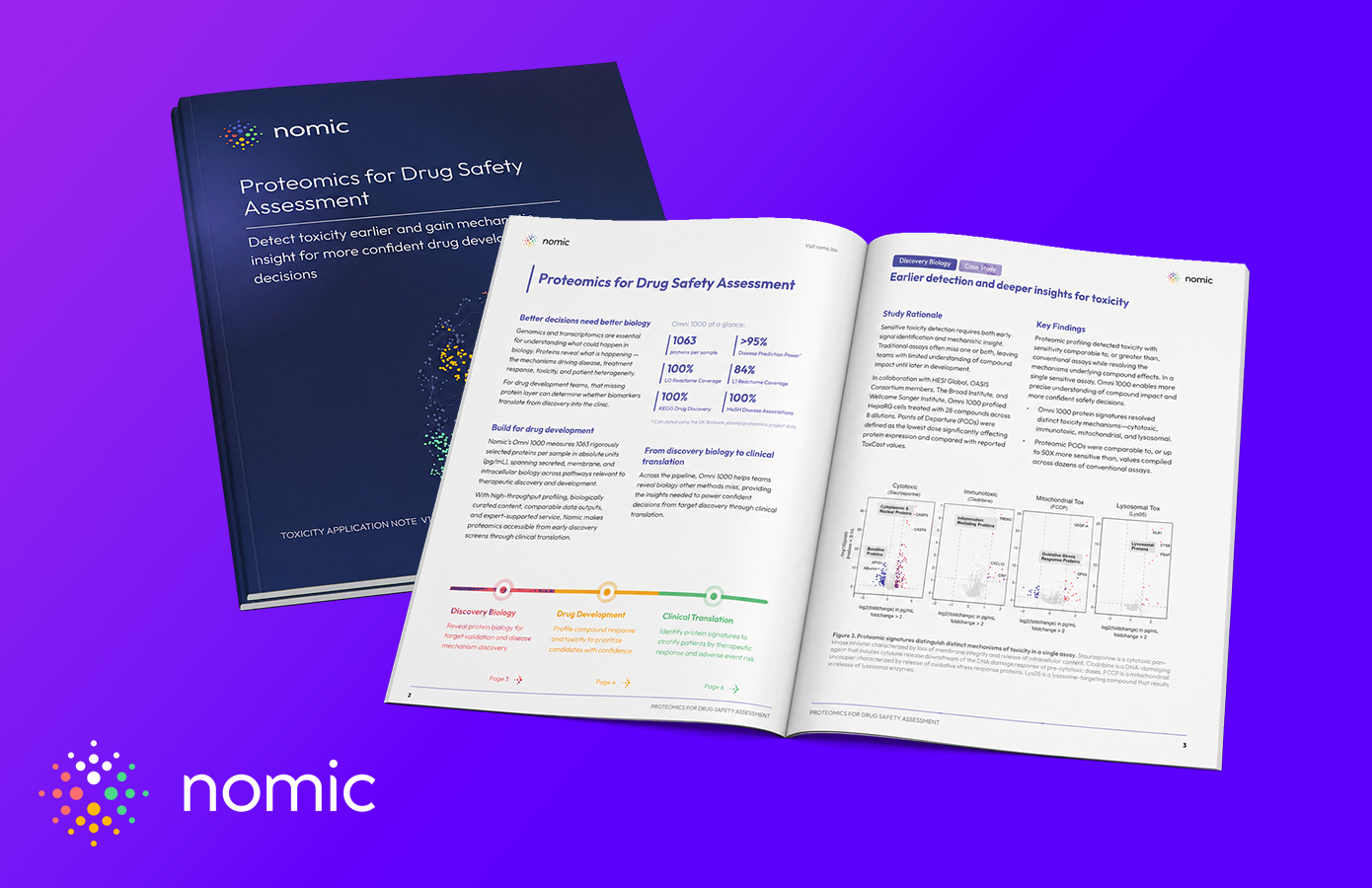
Toxicity assessment depends on early signal identification and mechanistic insight. Traditional assays often miss one or both of these pieces, leaving teams with an incomplete picture until later in development.
This application note shows how high-throughput proteomic profiling can reveal toxicity signals while helping resolve the mechanisms behind them. Across case studies in HepaRG cells, primary human hepatocytes, iPSC-derived microglia, and longitudinal immunotherapy samples, protein signatures helped distinguish toxicity mechanisms, identify missed liabilities, and separate therapeutic response from adverse event risk.
Download this application note to:
- Review case studies connecting protein signatures to distinct toxicity mechanisms and compound effects
- Examine how proteomic profiling detected toxicity at doses comparable to, or lower than, conventional assay readouts
- Explore how proteomic profiling can distinguish therapeutic response from adverse event risk in immunotherapy studies
Proteomics for Drug Safety Assessment
Subscribe to Updates
Get the latest insights and updates delivered straight to your inbox weekly.
Toxicity assessment depends on early signal identification and mechanistic insight. Traditional assays often miss one or both of these pieces, leaving teams with an incomplete picture until later in development.
This application note shows how high-throughput proteomic profiling can reveal toxicity signals while helping resolve the mechanisms behind them. Across case studies in HepaRG cells, primary human hepatocytes, iPSC-derived microglia, and longitudinal immunotherapy samples, protein signatures helped distinguish toxicity mechanisms, identify missed liabilities, and separate therapeutic response from adverse event risk.
Download this application note to:
- Review case studies connecting protein signatures to distinct toxicity mechanisms and compound effects
- Examine how proteomic profiling detected toxicity at doses comparable to, or lower than, conventional assay readouts
- Explore how proteomic profiling can distinguish therapeutic response from adverse event risk in immunotherapy studies
Toxicity assessment depends on early signal identification and mechanistic insight. Traditional assays often miss one or both of these pieces, leaving teams with an incomplete picture until later in development.
This application note shows how high-throughput proteomic profiling can reveal toxicity signals while helping resolve the mechanisms behind them. Across case studies in HepaRG cells, primary human hepatocytes, iPSC-derived microglia, and longitudinal immunotherapy samples, protein signatures helped distinguish toxicity mechanisms, identify missed liabilities, and separate therapeutic response from adverse event risk.
Download this application note to:
- Review case studies connecting protein signatures to distinct toxicity mechanisms and compound effects
- Examine how proteomic profiling detected toxicity at doses comparable to, or lower than, conventional assay readouts
- Explore how proteomic profiling can distinguish therapeutic response from adverse event risk in immunotherapy studies
Proteomics for Drug Safety Assessment
Toxicity assessment depends on early signal identification and mechanistic insight. Traditional assays often miss one or both of these pieces, leaving teams with an incomplete picture until later in development.
This application note shows how high-throughput proteomic profiling can reveal toxicity signals while helping resolve the mechanisms behind them. Across case studies in HepaRG cells, primary human hepatocytes, iPSC-derived microglia, and longitudinal immunotherapy samples, protein signatures helped distinguish toxicity mechanisms, identify missed liabilities, and separate therapeutic response from adverse event risk.
Download this application note to:
- Review case studies connecting protein signatures to distinct toxicity mechanisms and compound effects
- Examine how proteomic profiling detected toxicity at doses comparable to, or lower than, conventional assay readouts
- Explore how proteomic profiling can distinguish therapeutic response from adverse event risk in immunotherapy studies
Access Resource
Proteomics for Drug Safety Assessment
Toxicity assessment depends on early signal identification and mechanistic insight. Traditional assays often miss one or both of these pieces, leaving teams with an incomplete picture until later in development.
This application note shows how high-throughput proteomic profiling can reveal toxicity signals while helping resolve the mechanisms behind them. Across case studies in HepaRG cells, primary human hepatocytes, iPSC-derived microglia, and longitudinal immunotherapy samples, protein signatures helped distinguish toxicity mechanisms, identify missed liabilities, and separate therapeutic response from adverse event risk.
Download this application note to:
- Review case studies connecting protein signatures to distinct toxicity mechanisms and compound effects
- Examine how proteomic profiling detected toxicity at doses comparable to, or lower than, conventional assay readouts
- Explore how proteomic profiling can distinguish therapeutic response from adverse event risk in immunotherapy studies
Download resource
Get the latest insights and updates delivered straight to your inbox weekly.
Proteomics for Drug Safety Assessment
Get the latest insights and updates delivered straight to your inbox weekly.
Toxicity assessment depends on early signal identification and mechanistic insight. Traditional assays often miss one or both of these pieces, leaving teams with an incomplete picture until later in development.
This application note shows how high-throughput proteomic profiling can reveal toxicity signals while helping resolve the mechanisms behind them. Across case studies in HepaRG cells, primary human hepatocytes, iPSC-derived microglia, and longitudinal immunotherapy samples, protein signatures helped distinguish toxicity mechanisms, identify missed liabilities, and separate therapeutic response from adverse event risk.
Download this application note to:
- Review case studies connecting protein signatures to distinct toxicity mechanisms and compound effects
- Examine how proteomic profiling detected toxicity at doses comparable to, or lower than, conventional assay readouts
- Explore how proteomic profiling can distinguish therapeutic response from adverse event risk in immunotherapy studies